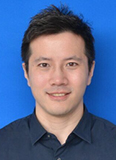
| Prof. Lijia PanNanjing University, China Pan Lijia received his Ph.D. degree from the University of Science and Technology of China. He is currently a professor and Ph.D. supervisor at the School of Electronic Science and Engineering/National Center for Collaborative Innovation of Microstructures, Nanjing University. He was a visiting scholar at Stanford University from 2011 to 2012 and again from May to August 2017. He is an IEEE Senior Member. In 2010, he was selected for the Ministry of Education’s New Century Excellent Talents Program, and in 2018, he received funding from the National Science Fund for Distinguished Young Scholars. As the second contributor, he received the 2017 National Natural Science Award of China (Second Class) and the First Prize of the 2016 Jiangsu Provincial Science and Technology Award. Professor Pan has long been engaged in research on polymer electronic materials and devices, electronic skin devices, bionic sensing, and embodied sensing devices. He has published more than 200 papers in journals including Nature Sustainability, Nature Communications, PNAS, Advanced Materials, Nano Letters, ACS Nano, Advanced Functional Materials, Energy & Environmental Science, Accounts of Chemical Research, and IEEE Electron Device Letters, with over 18,000 SCI citations and an H-index of 55. He has also been invited to contribute eight chapters to Chinese- and English-language monographs published by Science Press, Wiley, Elsevier, and World Scientific Publishing. |

| Prof. Jinhui SongDalian University of Technology, China Professor Song was selected by the National Thousand Young Talents Program and returned to China in 2015. He joined the School of Mechanical Engineering, Dalian University of Technology, and founded the Institute of Photoelectric Nanoscience and Nanotechnology (now renamed the Institute of Sensing and Vibration). Professor Song has long been dedicated to the research and application of nanoscience and nanotechnology. He has accumulated extensive research experience and achieved a series of original research achievements in the fields of synthesis and characterization of semiconductor nanomaterials, semiconductor micro-nano fabrication, micro-nano devices, flexible devices, and photoelectronic sensing. He firstly realized the characterization of piezoelectric properties of semiconducting nanomaterials and invented the world’s first nanogenerator. To date, Professor Song has published more than 110 papers in international peer-reviewed journals, over half of which are in top journals with an impact factor above 8, including two papers in Science. His publications have been cited over 23,000 times, with an h-index of 49. He holds 6 U.S. patents and more than 10 Chinese invention patents. |

| Prof. Zhengchun YangTianjin University of Technology, China Yang Zhengchun, Ph.D., senior engineer, graduated from the National University of Singapore and is currently a professor at Tianjin University of Technology. He is currently the vice president of the School of Integrated Circuit Science and Engineering, and has been selected into the Youth Project of Tianjin High-level Talent Introduction Program, Tianjin distinguished professor Youth Project, Tianjin University "Young and Middle-aged Innovative Talents Training Program", Tianjin Innovative Talents Promotion Program, and the 2018 China-Korea Young Scientists Exchange Program of the Ministry of Science and Technology. He also served as the head of the advanced materials and printing electronics team. He has been engaged in scientific research at the National University of Singapore and Seoul National University, participated in the research and development of carbon-based semiconductor materials and microelectronic memory devices, and accumulated research and development experience in semiconductor materials, devices and system integration. He has been deeply involved in the field of advanced semiconductor materials and devices for a long time, and his research direction is carbon-based semiconductor materials technology and devices, new energy devices and systems, advanced sensors and high-end equipment. |

| Prof. Lei ZhangNanjing University of Information Science and Technology, China Professor at Nanjing University of Information Science and Technology; Ph.D. from the Cavendish Laboratory, Department of Physics, University of Cambridge. His research focuses primarily on the intersection of big data, artificial intelligence, and science, such as applying natural language processing (large language models), artificial intelligence, and first-principles calculations to materials informatics and AI for Science. He focuses on the application of big data and AI methods in specific scientific and industrial fields, including physics, materials science, chemistry, chemical engineering, and pharmaceuticals. He has published more than 140 academic papers, including over 100 SCI-indexed papers as first or corresponding author. He holds five authorized national invention patents, with a cumulative H-index of 31 and over 4,000 total citations. He has been consecutively listed on Stanford University’s “Top 2% of Scientists Worldwide” list and has received funding from the National Natural Science Foundation of China, the Jiangsu Provincial Natural Science Foundation, and the Nanjing Outstanding Returnees from Overseas Programs. He serves as a reviewer for journals such as *Nature*, *Nat. Mater.*, *Nat. Commun., J. Am. Chem. Soc., and Adv. Mater., and serves as a Young Editorial Board Member or Editorial Board Member for journals such as J. Mater. Inf., CMC-Comput. Mater. Con., and MGE Advances. |